
Sinking into the Lake

This time, it started on a sunny Friday afternoon. I went upstairs to see if the dogs had enough water, and I had to stop to catch my breath at the top. “Ah, crap,” I thought. As the hours passed, I could feel my body getting heavier; when Andy asked me why I was rooting around in the pantry like a wistful badger right after dinner, I told him I was looking for something to eat that would make me less tired.
“Just go to bed!” he said. “It’s your flare-up starting.”
I maturely responded that it was not either, because I’d decided I wasn’t having one this time. Then, a beat later, added: “Hey honey? I’m going to bed. It’s not because I need to, though. I just really want to be in bed at [looks at clocks and rolls eyes heavenward] 7:16pm.”
I wandered back to the stairs and looked up. They were twice as long as they’d been six hours earlier: my personal Denali of pumpkin pine boards and dog hair. As the timing of my flare-ups has settled into a predictable 17+/-1 days from start to start, I’ve begun prepping for them like I’m expecting houseguests. I’ll make a big pot of stew, order groceries, vacuum the rugs, change the towels…basically all the household chores I won’t be able to do for the next 4-5 days. This time, I’d clearly missed sweeping the stairs. (And in case you’re all “PATRIARCHY!!!”, Andy should already does all the dishes, garbage, most of the laundry and yard work, and at least 70% of the dog-walking. Plus, he has to do everything and help me on the days when I’m totally flattened.) I slowly trudged upstairs and fell gratefully into bed - another sign that a flare is building; when climbing into bed feels like a religious experience, I’m in it.
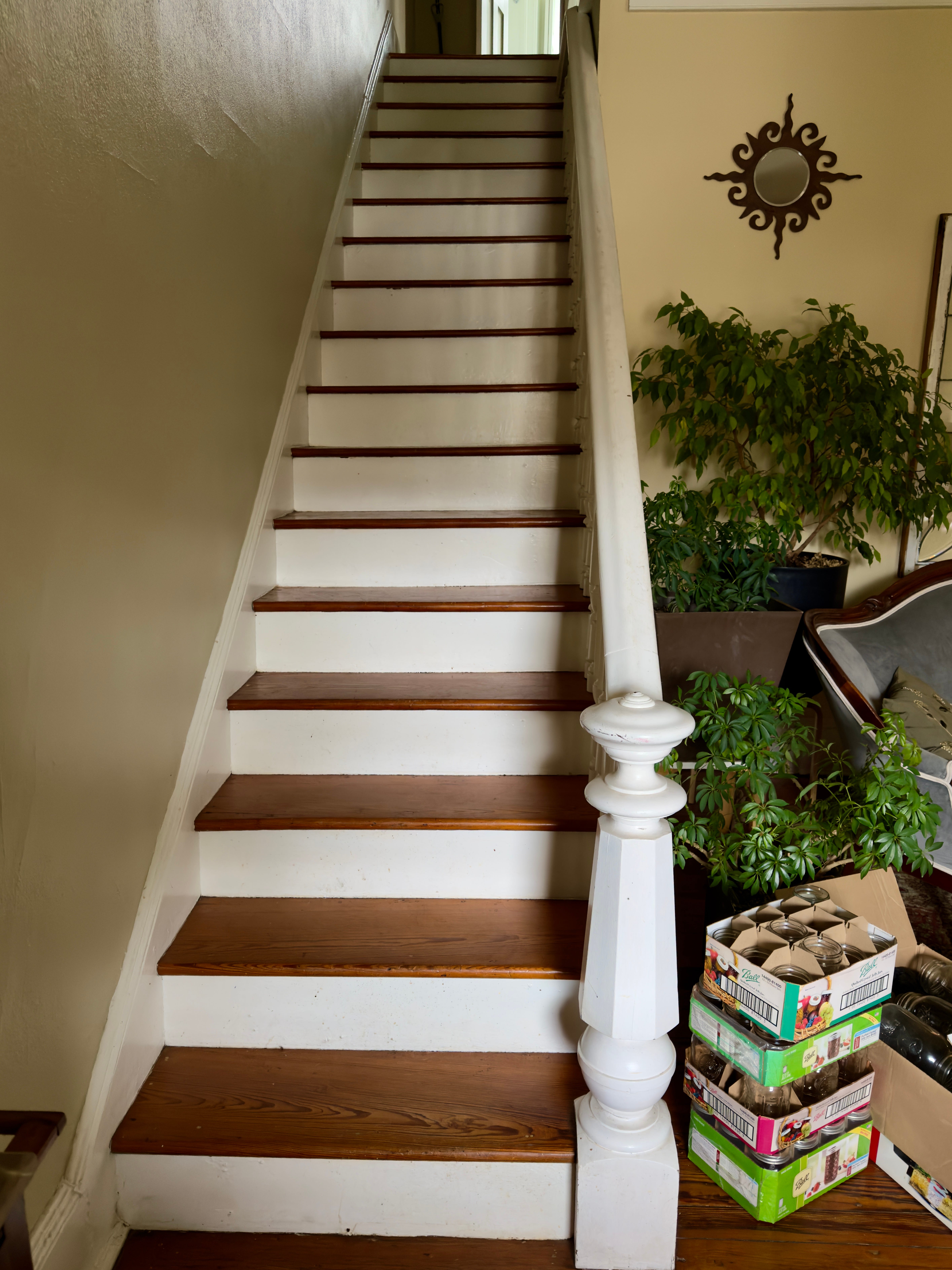
I’d been hoping that the flare would proceed gradually enough that I’d have enough oomph the next morning to attend a friend’s birthday brunch+hike. (There were going to be flower crowns and a lake, people! I’d picked out the perfect celebratory outfit a full week in advance.) Instead, gravity pinned me to the mattress, and after texting brief apologies, I fell back asleep and didn’t wake up again until well after noon.
I know in my head that the gravitational pull Earth exerts on me is constant, but the way I know it now parallels my knowledge that 55 degrees F is the same temperature in March and in October - which is to say it might be so, but it certainly doesn’t seem so. I had a sudden flash of sympathy for the newly re-weighted astronauts when we were watching Artemis II reenter the atmosphere after circling the moon; it is an odd but distinct sensation to feel gravity’s pull sharply increase, so that moving becomes both harder and more exhausting, and I wondered if the astronauts have dreams where they’re weightless again, pushing lightly off a wall to glide gracefully through the air.
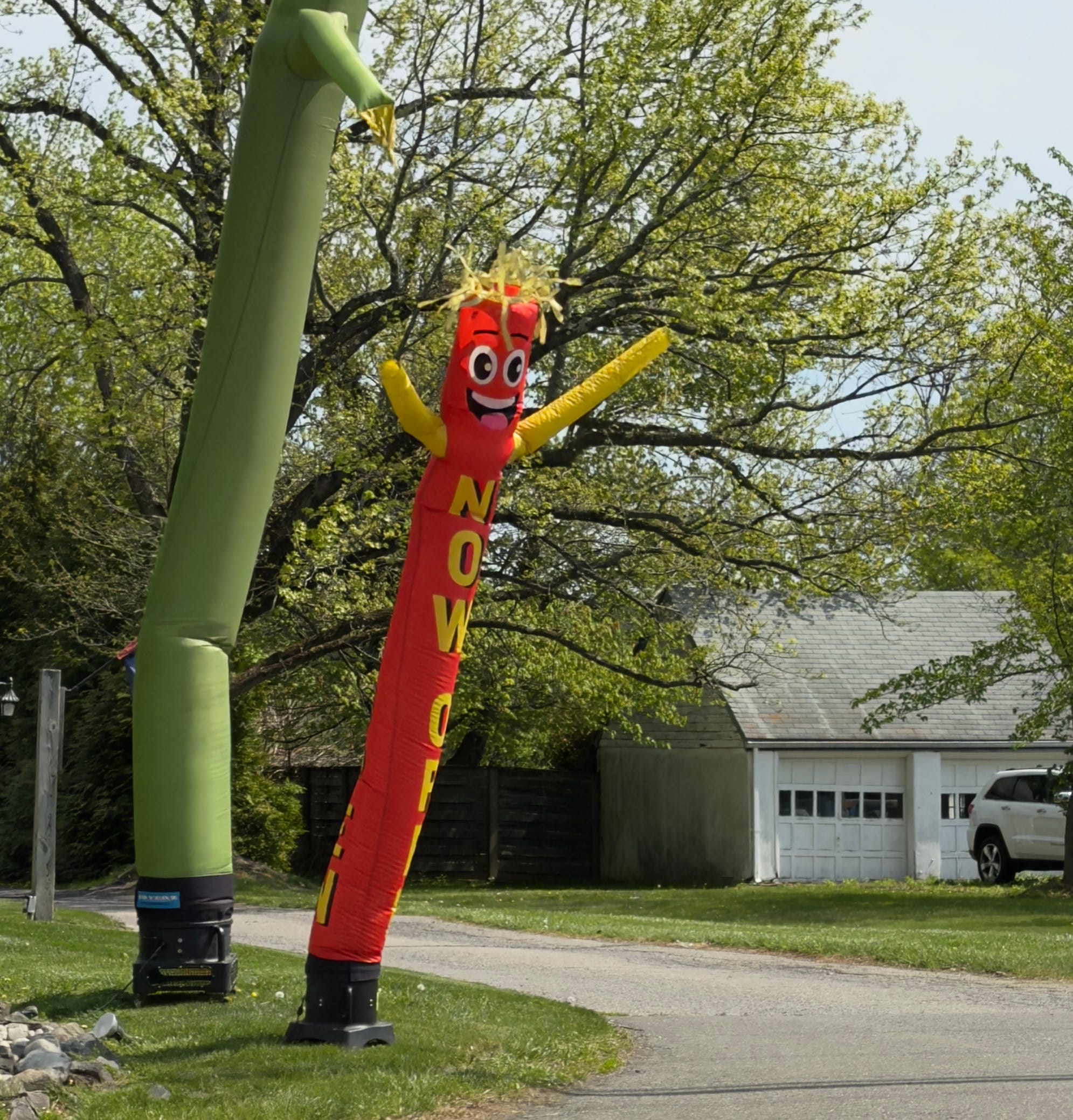
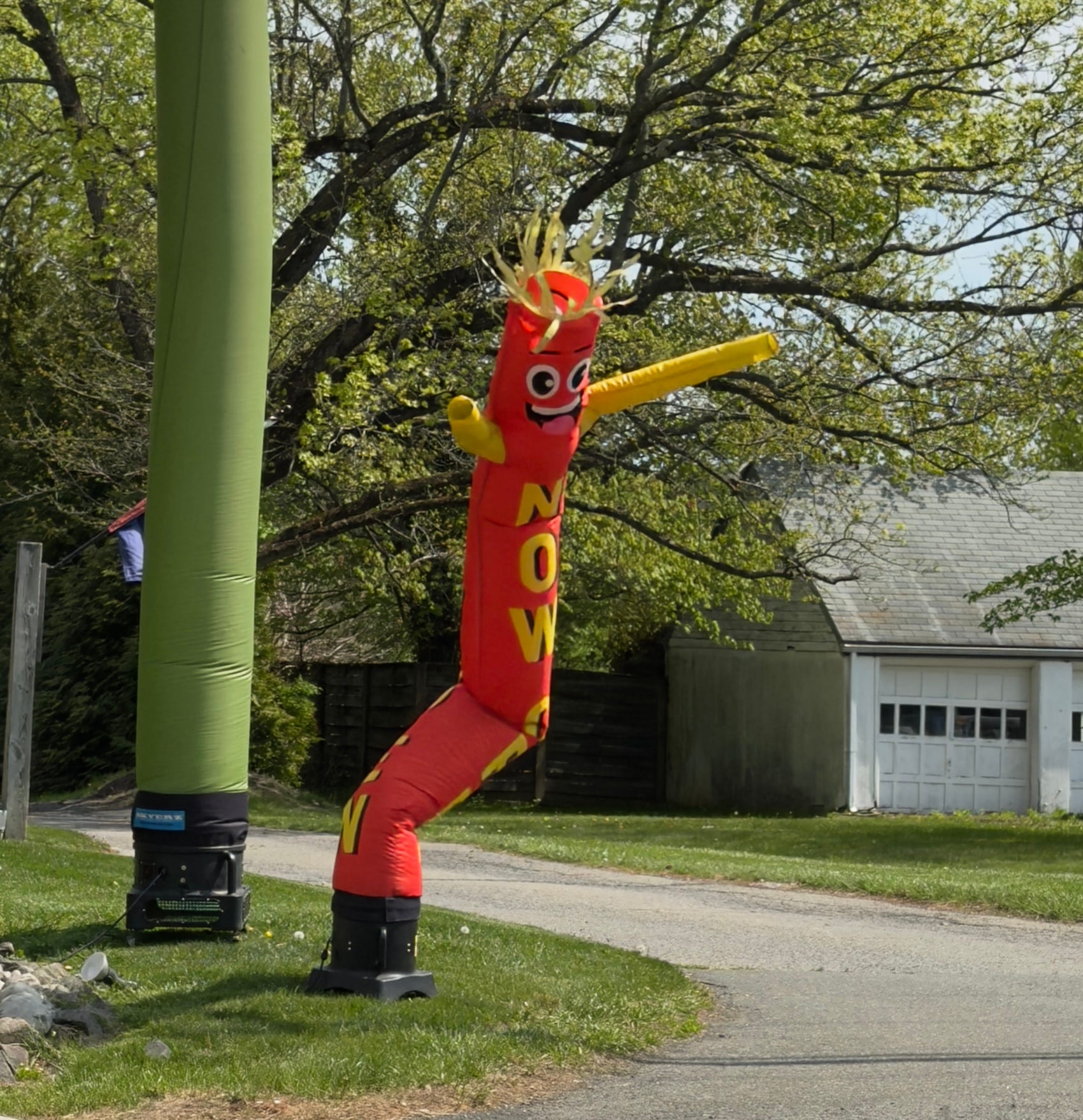
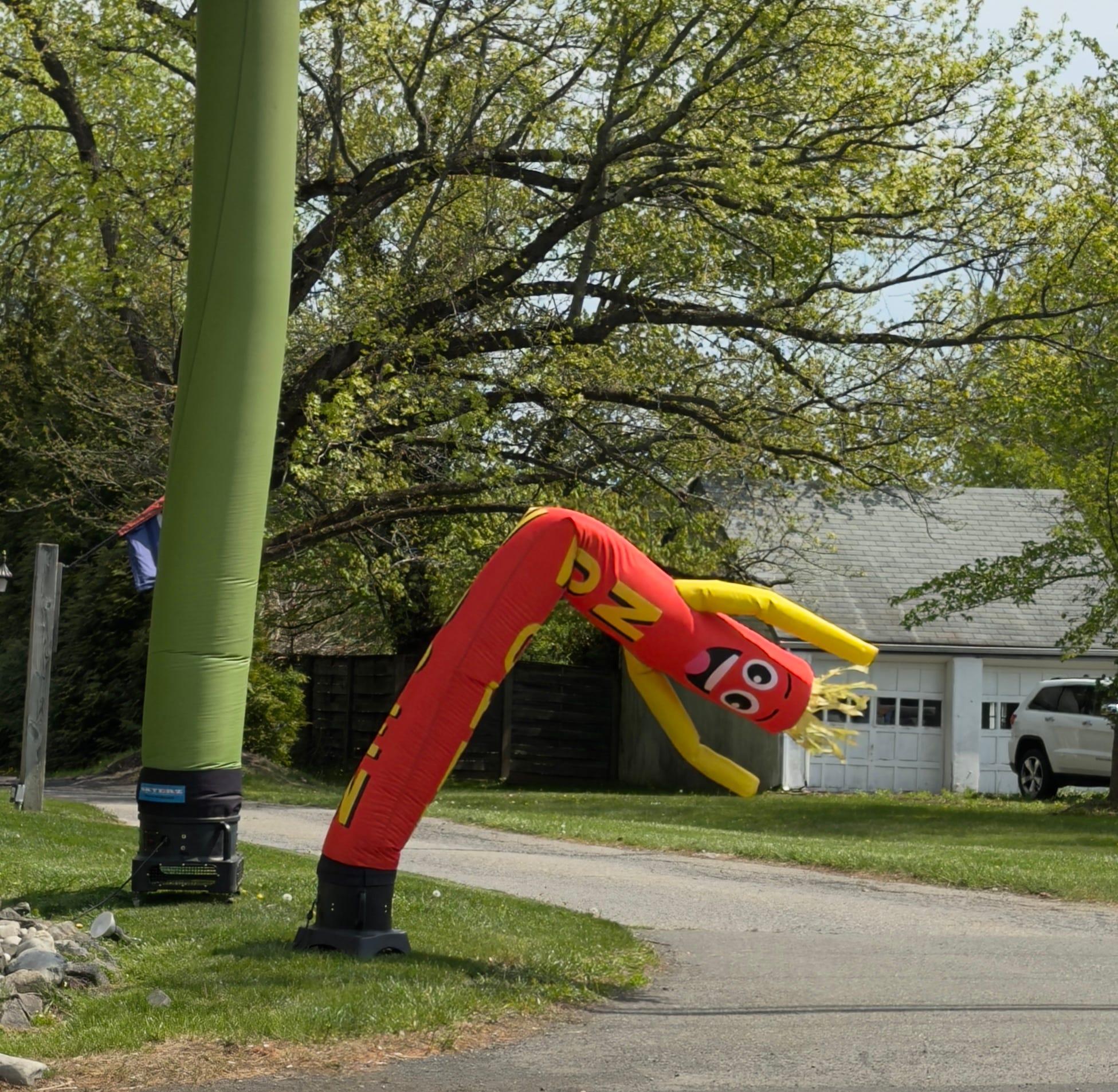
At least it doesn’t hurt to move during ‘Ramp-Up Day’ (as Andy and I have taken to calling the lead-in to a flare-up). It just takes a lot more effort. In fact, eventually it becomes enough of a challenge merely to sit up that I end up slowly tilting over sideways until I’m lying down, and there I stay for the next few days. If you picture the slow deflation of one of those tall inflatable Gumby-things that wave at you from used car lots, you get the picture. I go from being all bouncy and enthusiastic to collapsing down at weird angles until I’m flat on the couch, one arm still flailing up excitedly now and again, unable to re-inflate myself or even really care. Andy and I tried to put the world’s most confusing slipcover on our L-shaped couch once at this stage, and after about 30 seconds of trying to hoist it around in different ways, I was reduced to lying prostrate on the living room floor calling out helpful things like, “I think I figured out how it’s supposed to go! Try thiiiiiiis!” while Andy grunted and pulled the stupid thing in various directions.(For the record, I did not have it figured out. It only made sense to me five days later, when I re-entered the land of the Logical Beings.)
By contrast, the stage after Ramp-Up feels like nothing so much as sinking slowly to the bottom of a lake. The world quietly contracts around me: my thoughts are slower and less complex, and my ability to care about past or future events diminishes with my ability to care generally about what’s happening around me. I start dissociating from the sharp pain that’s gradually taking over my head, my neck, my spine, and eventually the dull ‘flu-style’ ache in my muscles when the low-grade fever sets in; apart from sleeping, it’s all I can do. Things feel distant and dimly filtered, like when my siblings and I would swim in Big Star Lake and open our eyes underwater to watch the light sifting through the sediment, able to see clearly only a few feet before things wavered into indistinguishable darkness.
There’s a strange sort of peace to this stage. I’m not capable of doing much of anything, physical or mental, but there’s also nothing much I want to do besides sleep. My world is small and immediate, and bodily sensations come in all-caps: HOT! (take off covers) CHILLS! (put covers back on) BRIGHT! (put pillow over head), etc. If I’m lucky, this only lasts for a 24-36 hours; this past time it lasted for 48+. I sleep until the pain wakes me up, and then I take more gabapentin and/or naratripan and/or Tylenol and maybe eat a little something and go back to sleep if I can. (This, by the way, is a vast improvement over the six-week pre-Valacyclovir cycle, where the ramp-up would last a full week, the worst of the worst was both worse and stretched over 4-5 days, and recovery lasted another week. At that point, my brain took a noticeable hit each time as well.)
At the ‘epicenter’ of a flare - as Andy calls it, eager to know on which date to attach the appropriately colored sticker on his hand-drawn wall calendar - I can’t even handle listening to an audiobook. Any input is too much input, and so I lie still and let my quiet thoughts drift and I slide in and out of sleep. Out of bed, I ‘furniture surf’ for stability and support; going downstairs involves leaning my weight against the wall and then sliding my body down, moving first one foot and then the other to the same step, then one foot and the other to the next step. Meanwhile, Fenja races down the stairs before me and then back up again, over and over, while Tor waits to descend patiently behind me. (It’s hard not to feel like they’re herding me like they would an injured sheep, making sure I get to the couch safely.)
And then, usually just as I start to wonder if I’m going to feel like this forever, I have that magical “Oh!” sensation that comes when you move from being really sick to having just been really sick - the delicious difference between “Someone is currently beating me with a heavy stick” to “Someone has recently beaten me with a heavy stick”. These are the days I’m mostly like to overdo things: it’s such a joy and relief to be able to do things that I’ll decide to meet up with friends or make dinner or play with the dogs, and in the process completely drain my batteries. (Not incidentally, these are also the days on which Andy and I are most likely to squabble. I’m sick of needing him to help me do basic things like get a glass of water from the kitchen, he’s sick of me needing him for those things, and we’re both exhausted for the previous few days. Fortunately, the cycle is predictable enough that we’re able to see what’s happening much more quickly than before, and we’ve gotten much better at heading off conflict at the pass.)
The end of a flare-up is a bit amorphous. I might gradually feel better, or I might feel like crap in the mornings and significantly better in the afternoons for a few days, or I might just wake up one morning feeling pretty good. (This last one is, naturally, both the rarest and my favorite.) It’s not clear what, if anything, I can do to influence this process - it appears to depend at least as much on the weather (my migraines wax and wane with fluctuations in humidity and temperature) as on how good I am at letting myself rest - and so I ride it out as best I can, until I’m finally on the other side.
And here’s the best thing about life post-brain-stent: the other side, the space between flare-ups, is fabulously better than it was before I had the procedure in July 2025. With normal intracranial pressure, I have more energy, I’m in sooooo much less pain, and - best of all - my mind is more clear. My short-term and working memory has graduated from ‘Econo-Basic’ to ‘Memory Lite’, and although I dearly miss my former ‘Adamantine Plus’ plan, it’s an incredible relief to have new pieces of information start to stick a little better. I spent two years doing the NYT Spelling Bee with absolutely no ability to recall which words I’d already guessed, for instance, and it’s delightful to remember some of them now instead of being constantly surprised. Feeling new information ‘snag’ on a bit of underlying cognitive structure is a remarkably distinct sensation from its dropping noiselessly into the depths like a rock into a pond, never to be seen again.
In my next post, I promise to talk about some of the things I’m able to do now that I wasn’t before - including a quasi-pilgrimage to Canterbury, England. Until then, be nice to your noggins!
Oh, Christina, I'm glad that you have not lost your sense of humor through all of this. And I would think that your being able to describe so accurately the before-during-after feelings of a flare-up could be helpful to the medical community and to others who may experience this, but who are not so self-observant or not as good at describing their experiences. My prayer is that your flare-ups are more rare and last fewer days.
Your words about the horrors are so fresh and humor-filled. I know it's a double burden to convey and soften the experience for others when it really just sucks, but I'm so glad for the good you're having on the other side of lake time.